

Corporate site location confidentiality is not a courtesy. Instead, it is a business necessity. Site location decisions involve sensitive financial data, workforce strategies, real estate valuations, and competitive intelligence that companies cannot afford to expose early. For Ohio communities competing to attract employers, protecting that information while honoring public records duties has never mattered more, especially after recent changes to Ohio law.
Why Corporate Site Location Confidentiality Is Critical
Companies routinely share proprietary information with communities. That includes projected employment figures, capital investment plans, supply chain details, and incentive requirements. Premature disclosure can derail a project entirely. For example, a competitor may accelerate its own plans or lobby against an incentive package. Real estate prices can spike the moment a prospective buyer is identified. Labor markets shift when a major employer’s intentions become known. For these reasons, companies expect communities to treat the information with private-sector discretion. Communities that cannot demonstrate that capacity often lose projects before negotiations begin.
Balancing Confidentiality With the Public’s Right to Know
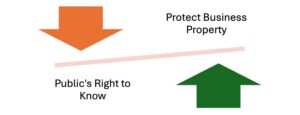
Ohio’s Public Records Act creates a strong presumption that government records are open. Historically, this created real tension in economic development. Local officials were caught between a company’s demand for confidentiality and their legal duty to disclose records on request. To manage that tension, communities used careful timing, project code names, and a limited circle of informed officials. They also relied on non-disclosure agreements as a first line of defense. However, NDAs alone are imperfect. They bind the community, yet they cannot override Ohio’s public records law, so a records request could still compel disclosure.
The Role of Non-Disclosure Agreements
Non-disclosure agreements remain a foundational tool. A well-drafted NDA establishes the scope of confidential information, the obligations of each party, the duration of confidentiality, and the consequences of unauthorized disclosure. For communities, an NDA signals good-faith commitment and provides a contractual framework for managing sensitive data. It also defines what information is covered, which reduces ambiguity. Even so, NDAs must be drafted with Ohio’s public records law in mind. Until recently, no Ohio statute expressly shielded economic development information. In some cases, officials simply meet privately for economic development matters, which they are allowed to do. Sometimes an NDA even hands the opposition an issue to use against a project.
Ohio Revised Code Section 9.66(D): A New Layer of Protection
A recent change to Ohio law significantly strengthens these protections. Ohio Revised Code Section 9.66(D) now requires that economic development information, as defined in the statute, be kept confidential. This is a meaningful shift. Rather than leaving communities to manage exposure case by case, the legislature has carved out a protected category. Consequently, qualifying information shared during site location negotiations may now be withheld from public records disclosure. Communities finally have a statutory basis, not just a contractual one, for protecting sensitive company data. As a result, Ohio levels the playing field with competing states that have long offered similar protections.
Indemnification Agreements: Protections and Limits
Section 9.66(D) also contemplates indemnification agreements that protect local officials from personal liability tied to the release of confidential information. This protection matters, because officials should not bear personal financial risk for good-faith compliance with complex legal duties. However, indemnification has limits. Typically, it does not cover intentional disclosure, gross negligence, or acts outside official duties. Therefore, officials and their counsel must draft these agreements carefully. They should define covered conduct, confirm the entity’s authority to indemnify, address appropriations risk, and avoid conflicts with anti-indemnity principles. Used correctly, indemnification under Section 9.66(D) encourages officials to engage confidently, knowing good-faith compliance carries a legal safety net.
Confidentiality and the Public’s Right to Know
Confidentiality matters for corporate site location, but it must eventually be balanced with the public’s right to know what its government is doing. That right is exactly why zoning, annexation, and incentives are debated and awarded in public meetings. The community receives notice and stays aware of the planned action of a governmental entity.
Contact the Montrose Group’s Dave Robinson at drobinson@montrosegroupllc.com with questions about confidentiality in economic development negotiations.