

Artificial intelligence is the defining technology of the 2020s. AI means computer systems that perform tasks that normally require human intelligence. As the industry matures, policymakers at every level face new regulatory challenges, and state AI regulation is moving fastest of all. Communities planning economic development and workforce strategies need to understand AI’s structure, economic potential, and policy complexity.
Defining AI and the Industry Landscape
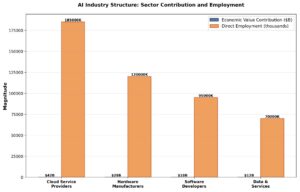 The AI industry includes several connected sectors. Hardware manufacturers produce specialized processors and computing equipment. Cloud service providers offer AI platforms and infrastructure. Software developers create AI applications across industries, and data companies supply training data. Together, this ecosystem generates enormous economic value. However, it also consumes massive amounts of electricity, computing power, and data.
Transformative Economic Potential
Economic analyses project that AI will add to GDP growth, productivity, and business expansion across sectors. For instance, Federal Reserve analysis and Morgan Stanley midyear forecasts suggest AI-driven productivity could add meaningful percentage points to annual growth. However, this transformation creates winners and losers. Some sectors and workers benefit enormously, while others face displacement. That uneven impact creates political pressure for protective regulation.
The Multi-Level Policy Challenge
Federal policymakers are debating comprehensive AI regulation frameworks. The White House is developing national AI policy guidelines. Meanwhile, Congress is considering data center moratorium legislation, privacy standards, and employment protections. State governments are pursuing AI regulation, data privacy laws, and new energy policies. Local jurisdictions, in turn, grapple with data center zoning, environmental impacts, and community concerns.
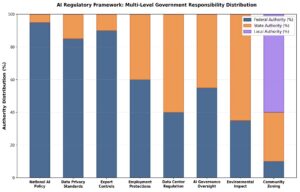
Critical policy issues include data center regulation covering energy use, water use, and environmental impact. They also include privacy protection, data governance, and AI’s impact on employment. Algorithmic transparency and bias are concerns as well. Finally, policymakers are weighing how AI systems interact with humans in hiring, lending, and criminal justice decisions.
Additional debates center on AI model training requirements and export controls on advanced systems. Intellectual property protection for AI-generated content and liability when AI causes harm are also in play. The challenge is substantial. In short, policymakers must enable innovation while protecting workers, consumers, and democratic values.
State AI Regulation in Ohio, Indiana, and Kentucky
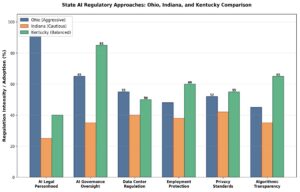
Regional states are taking divergent approaches to state AI regulation. Ohio has taken the most aggressive stance with HB 469, which the Senate passed in May 2026. The bill declares AI systems non-sentient and prohibits granting legal personhood to AI entities. In effect, it sets clear boundaries for AI governance. Ohio lawmakers are also pursuing broader AI regulation despite federal pushback.
Indiana has released an official State Artificial Intelligence Policy and Guidance framework. However, it remains in the early stages of legislative development. Specific laws targeting AI use are still a work in progress, and observers describe Indiana’s approach as fragmented. Kentucky, by contrast, has advanced furthest on specific legislation. Governor Beshear signed HB 489/HB 528, which regulates AI use in government and public sector operations. Kentucky’s AI Governance Committee statute (KRS 42.731) sets specific duties and oversight for state AI applications.
What Divergent State AI Regulation Means for Economic Development
These regional differences reflect broader tensions in AI regulation. Ohio focuses on AI’s fundamental legal status. Kentucky emphasizes government accountability and public sector governance. Indiana takes a cautious approach to policy development. For economic development professionals, these differences will shape AI investment patterns and business location decisions across the region.
Communities that proactively address AI policy will be positioned to capture AI’s benefits while limiting disruption. That means supporting workforce transition programs, clarifying regulatory expectations, and building partnerships between government and industry. The regulatory landscape will crystallize over the next 24 to 36 months. As a result, this is a critical period for policy leadership and economic development strategy.
Contact Tim Biggam at the Montrose Group, LLC at tbiggam@montrosegroupllc.com if you need assistance with any lobbying matter.