

In simpler times (as recently as three years ago), gaining a commitment for electric service for a data center or other economic development project was straightforward. A company, community, or site location consultant contacted the local electric utility’s economic development executive, provided the project address, requested a “will-serve” letter, and received a commitment for electricity to support the planned project.
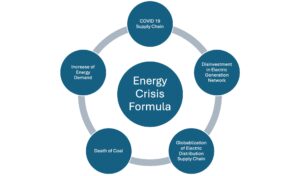
Then COVID hit. Global supply chains stalled, and it became clear that many critical electric components—especially transformers—were manufactured overseas. Timelines for power commitments were significantly disrupted, negatively impacting large economic development and data center projects. At the same time, demand for electricity surged, driven by increased manufacturing automation, next-generation consumer devices, and rapid data center development creating large-scale electric loads. This was compounded by land speculation, with developers requesting massive electric capacity for data center projects that may never materialize.
Adding to the challenge, utilities did not anticipate this rapid increase in electricity demand and have reduced investment in the nation’s electric transmission system since 2003. Policy decisions in Washington, D.C. further constrained supply by accelerating the shift away from coal, historically one of the primary sources of high-capacity baseload power. While renewable energy sources such as wind, solar, biomass, and geothermal are cleaner, they cannot consistently meet the 24/7 power requirements of data centers, steel mills, or other energy-intensive industries. To be clear, data centers did not create the current U.S. energy crisis; it is the result of overlapping market, public health, and policy factors.
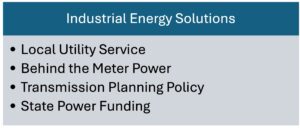
Now, enough of the complaining—let’s talk about solutions. The reality is that sites, communities, companies, states, and nations that identify and implement reliable energy solutions for industrial and data center projects will be both short- and long-term economic winners. Several solutions to the industrial electricity challenge exist, including working with local utilities to secure power, developing on-site generation “behind the meter,” updating state electric transmission planning policies, and pursuing state-level policy changes to fund energy infrastructure investments.
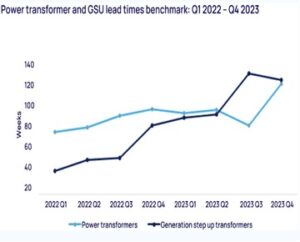
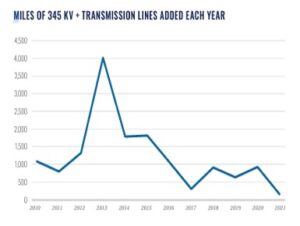
Whether a state operates under regulated or deregulated power markets, electric transmission remains a regulated service. Investor-owned utilities, electric cooperatives, and municipal power providers deliver this service, but many have struggled to keep pace with new demand for electricity. Some states, such as Ohio, have introduced regulatory structures requiring data center developers to commit financially to the power they request while obligating utilities to deliver that capacity. American Electric Power operates under such a structure in Ohio.
As a result, many developers are pursuing on-site power generation using natural gas captured from interstate pipelines to fuel dedicated power plants. States like Ohio have established defined approval processes through entities such as the Ohio Power Siting Board, which allows certain high-capacity energy projects to bypass local zoning requirements. Large data center projects have already navigated this process successfully, and others are expected to follow.
Other states are addressing transmission challenges through long-term planning and funding initiatives. Illinois created the Illinois Power Agency to plan for future transmission needs. Ohio established a $100 million JobsOhio fund to support energy infrastructure investments and permits natural gas utilities to recover infrastructure costs through economic development riders. Texas announced a $5 billion natural gas power plant development fund, and Ohio passed legislation to reduce taxes and regulatory barriers for new power generation facilities—all aimed at addressing long-term electricity supply challenges.
Solutions to the current industrial and data center energy crisis exist, but they require a coordinated mix of policy action, utility investment, and economic development negotiations to implement successfully.