

Populism, whether seen in leaders like Donald Trump or New York City Mayor Zohran Mamdani, presents significant challenges for economic development organizations (EDOs). This political approach divides society into the “pure people” vs. the “corrupt elite,” often focusing on moral struggles rather than policy. Anti-establishment rhetoric is used to mobilize support and can create resistance to development projects that produce jobs and investment.
To succeed, EDOs must move beyond data-driven strategies and focus on value-based approaches that address fear, mistrust, and the sense of being left behind. Engaging empathetically with communities and stakeholders is essential.
Understanding Community Concerns
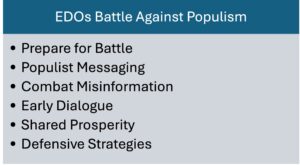
High-performing EDOs prepare for opposition by identifying potential grievances and mapping key stakeholders such as clergy, teachers, and business owners. They monitor local sentiment through social media and public meetings, study prior opposition patterns, and partner with trusted local consultants and attorneys to build credibility.
Some strategies for proactive engagement include:
-
Engaging early with residents affected by development projects
-
Listening to concerns and providing solutions, including property purchases when necessary
-
Creating comprehensive land use or economic development plans to guide future projects
By taking these steps, EDOs can anticipate challenges and turn potential opponents into project advocates.
Messaging for Community Support
EDOs must frame projects around community needs instead of developer profit. This approach emphasizes benefits such as:
-
Jobs that keep young adults in the region
-
Housing for essential workers like teachers, police, and firefighters
-
Solutions to traffic, water, or flooding issues
Using real-life stories about local residents and businesses humanizes development projects, fosters empathy, and helps communities see the tangible benefits of economic investment.
Addressing Misinformation
Misinformation can quickly undermine development efforts. High-performing EDOs respond by releasing accurate information early and often, including data on traffic, property values, and environmental impact. Using social media and other communication channels allows for quick corrections and direct engagement with residents.
Community advisory boards can also help maintain ongoing dialogue, ensuring local voices are heard throughout project planning and implementation.
Shared Prosperity and Local Benefits
Projects are more likely to gain support when communities share in the benefits. Aligning development with local priorities, such as funding for schools or infrastructure improvements, demonstrates tangible advantages for the community. Tools like Local Benefits Agreements (LBAs) and Payments In Lieu of Taxes (PILOTs) can formalize these shared benefits and create lasting support.
Strategic Political Navigation
Not every project will satisfy all residents. EDOs must navigate political challenges by:
-
Building coalitions of supporters to speak at public meetings
-
Educating elected officials on facts and community benefits
-
Preparing contingency plans to adjust negotiable project elements
-
Knowing when to delay or withdraw items strategically to gain long-term success
By focusing on long-term outcomes and building local alliances, EDOs can implement economic development projects even in the face of populist opposition.