

High-performing economic development organizations (EDOs), whether inside government or private structures, share five common elements that drive high-wage job creation and capital investment. These include clear metrics for success, a strong board, effective business retention, site development readiness, and workforce strategy.
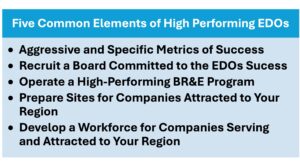
1. Establish Aggressive and Specific Measures of Success
Measuring economic success ensures resources are efficiently allocated and strategies yield real impact. High-performing EDOs focus on:
-
Job quality and income growth rather than just counting activities
-
Comparing performance to successful peer regions
-
Evaluating readiness from a corporate site location perspective
Tracking meaningful metrics fosters long-term regional prosperity and accountability.
2. Recruit a High-Performing Board of Directors
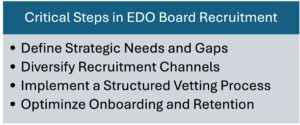
The success of an EDO is closely tied to its board composition. Key steps include:
-
Defining strategic needs and skill gaps
-
Recruiting diverse members across industries and influence networks
-
Structured vetting, onboarding, and retention strategies
A well-aligned board ensures decisions support the community’s economic development goals.
3. Implement a Robust Business Retention and Expansion (BR&E) Program
Since 80% of new jobs come from existing businesses, high-performing EDOs focus on retaining and growing local companies. A strong BR&E program includes:
-
Assembling a diverse, agile team
-
Adopting a data-driven approach
-
Conducting strategic outreach
-
Closing the loop with actionable solutions
BR&E visits act as problem-solving sessions to retain and expand regional businesses.
4. Prepare Sites for Corporate Development
Corporate site location projects prioritize sites that are ready for development. High-performing EDOs:
-
Conduct industry cluster analysis to identify target sectors
-
Control land suitable for large-scale development with access to utilities and transport
-
Ensure proper zoning and pre-negotiated local incentives
-
Maintain move-in-ready speculative buildings
Site readiness signals to companies that the community is prepared for immediate investment.
5. Focus on Workforce Development
A skilled labor pool is critical for attracting and retaining businesses. Workforce development programs:
-
Bridge the gap between available skills and employer needs
-
Are implemented by governments, schools, non-profits, or private companies
-
Enhance employability and regional competitiveness
Strong workforce initiatives help communities retain talent and meet industry demands.
High-performing EDOs are the result of strategic planning, strong governance, and targeted programs that ensure measurable economic growth.