

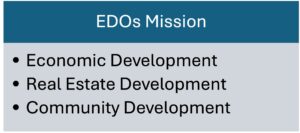
Economic development organizations (EDOs) exist to promote economic growth, strengthen communities, and support strategic real estate investment. The mission of economic development organizations centers on advancing economic development, community development, and real estate development in ways that create jobs and expand the tax base that supports local, state, and federal governments.
While these three disciplines often overlap, each serves a distinct purpose in building a strong regional economy.
What Economic Development Organizations Do
Economic development focuses on raising the standard of living for residents by retaining and attracting high-wage jobs and supporting business growth. At its core, economic development involves the strategic use of public tools and incentives to encourage private-sector investment and wealth creation.
Successful economic development expands the local tax base, which in turn supports essential public services such as schools, infrastructure, and public safety. By prioritizing high-value job creation and competitive industries, EDOs help communities build a sustainable, world-class quality of life.
Economic Development vs. Real Estate Development
Real estate development is the continual reconfiguration of the built environment to meet society’s needs. Real estate developers improve land and property to increase value, for example, converting farmland into housing or redeveloping an abandoned factory into a shopping center.
While real estate projects contribute to a healthy regional economy, they do not always generate high-wage employment. However, real estate developers often play an important supporting role in broader economic development strategies, particularly when projects align with job-creation goals.
The Role of Community Development
Community development focuses on expanding equality of opportunity and improving quality of life in targeted neighborhoods. Community developers typically address challenges such as:
-
Affordable housing
-
Workforce training
-
Small business financing
-
Neighborhood revitalization
-
Infrastructure gaps
Although community development outcomes often complement economic development goals, the primary focus is place-based improvement, especially in areas facing poverty, crime, unemployment, or aging infrastructure.
Communities with high crime rates or low educational attainment often struggle to attract high-wage employers. For this reason, community development and economic development frequently work hand in hand to prepare neighborhoods for long-term investment.
Why EDOs Focus on All Three
Economic development organizations are most effective when they integrate economic, community, and real estate development strategies. Success across all three areas produces stronger regional competitiveness, more inclusive growth, and a more resilient tax base.
By coordinating these efforts, EDOs help communities attract quality employers, support residents, and ensure that physical development aligns with long-term economic goals.