

2026 will be a defining year for companies and communities navigating an increasingly complex policy and economic environment. For the sixth year, the Montrose Group is releasing its Top 10 Corporate Site Location and Policy Trends for 2026, examining how corporate site location trends will determine which organizations successfully capture new opportunities and which struggle to compete.
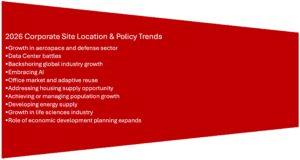
Across the nation, states will confront six major strategic challenges in 2026. Driven by policy decisions, technological change, shifts in the global economy, and evolving workforce behavior, corporate site location trends are being reshaped by issues such as artificial intelligence, the collapse of the office market, limited housing supply, declining population growth in rural communities, constrained energy availability, and the impacts of global trade conflict.
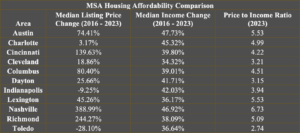
The lack of housing supply continues to influence corporate site location trends, as companies increasingly factor workforce housing availability into location decisions. Major regions in Ohio and across the country are experiencing rising housing costs that are outpacing income growth, creating challenges for both employers and communities seeking to attract talent.
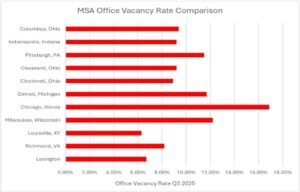 Rising office vacancy rates are making the location of white-collar jobs more attractive for some communities, yet national hiring for office-based roles remains muted. The adoption of artificial intelligence across industries such as financial services, insurance, and corporate headquarters is altering corporate site location trends by reducing overall demand for traditional office employment.
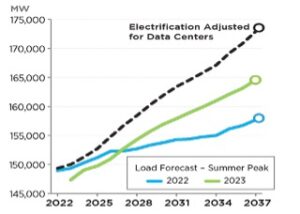
Data center expansion will remain a key component of corporate site location trends in 2026 as technology firms seek to meet the computing demands required for artificial intelligence. At the same time, land use conflicts, incentive scrutiny, and limited electricity capacity are increasing tensions at the local level. These challenges are driving more creative energy solutions, including co-generation facilities designed to serve data centers and industrial users behind the meter.
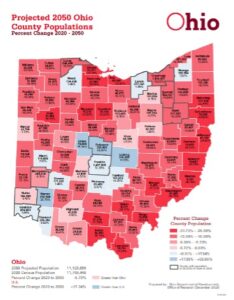
 Demographic pressures will also play a central role in corporate site location trends. Population loss across the Northeast, Midwest, and rural America is becoming a critical policy issue. In Ohio, population growth is largely confined to Central Ohio; without it, the state would have lost approximately 100,000 residents. More concerning is the widespread population decline in rural counties, many of which are experiencing double-digit losses that threaten their ability to retain existing employers and attract new corporate investment.
Industry growth remains a constant theme in the Montrose Group’s corporate site location trends analysis. In 2026, aerospace and defense investment is expected to accelerate as technology disruption and federal funding drive transformation across the sector. According to International Data Corporation, U.S. aerospace and defense spending on artificial intelligence and generative AI is projected to reach $5.8 billion by 2029, more than three times 2025 levels.
Life sciences manufacturing is also positioned for continued growth as pharmaceutical production increasingly returns to the United States. Ongoing reshoring of drug manufacturing and expansion of drug distribution facilities are expected to continue as China becomes a less viable source for U.S. pharmaceutical supply. JLL reports that pharmaceutical reshoring remains a bright spot, with more than $250 billion in U.S. biomanufacturing investments announced and increased touring activity for manufacturing space.
Taken together, these corporate site location trends point to 2026 as a year of significant opportunity. Companies and communities that align policy, infrastructure, workforce, and investment strategies will be best positioned to achieve long-term economic success.