

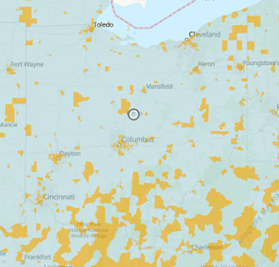
 Opportunity Zones are federally designated census tracts where investors can receive preferential tax treatment for reinvesting capital gains through Qualified Opportunity Funds (QOFs). Recently, the Congress reauthorized Opportunity Zones “OZ 2.0.” For communities, investors, and policymakers, the reforms create both new opportunities and new responsibilities, especially as states prepare to recommend new OZ designations for the first time since the program’s inception. OZ 2.0 restructures the program in several major ways:
- OZs are now a permanent feature of the federal tax code
- Beginning in 2027, capital gains invested in QOFs qualify for a five-year deferral from the date of investment, replacing the former, fixed end-date deferral system.
- Standard OZ investments receive a 10% basis step-up after five years, while rural OZ investments receive a significantly enhanced 30% step-up.
- Rural zones now benefit from more flexible substantial-improvement rules and must comprise at least one-third of new zones designated in 2027.
- The income threshold for qualifying tracts drops from 80% to 70% of area or statewide median family income, and the “contiguous tract” rule is eliminated – meaning every tract must qualify on its own again.
- Beginning in 2027, QOFs will face expanded reporting requirements, including job creation data, housing outcomes, NAICS codes, and asset values.
Perhaps the most consequential change for local governments is the new decennial redesignation cycle, which gives governors the authority to reshape the Opportunity Zone map every 10 years. Important dates to consider are as follows:
- Current OZ map remains in effect through December 31, 2026.
- Ohio will hold a January 2026 Opportunity Zone Tax Credit application round, opening January 12th at 10:00 AM ET and closing January 20th at 4:00 PM ET, with $6.78 million in remaining FY 2026 credits available.
- Governors must submit new federal OZ redesignation recommendations by July 1, 2026.
- The new OZ 2.0 map becomes effective January 1, 2027.
For Ohio, the timing is particularly important as the state tax credit round in January 2026 will be the last opportunity for investors to pair state incentives with the existing federal OZ map before redesignation reshapes eligible tracts across the state. Ohio stands to benefit significantly from OZ 2.0’s strengthened framework. Permanent program status will allow local economic development organizations, land banks, and municipalities to market long-range investment opportunities with far greater certainty. Meanwhile, rural regions, often capital-starved, gain enhanced incentives that may attract new funds, developers, and operating businesses.
As the redesignation process begins, Ohio’s leaders now can advocate for census tracts that reflect present economic conditions rather than what was present in 2010 Census data. Local engagement will be essential in shaping the next generation of Opportunity Zones, ensuring that the state positions itself competitively in the decade to come.
Contact Dave Robinson at drobinson@montrosegroupllc.com if you have any questions on Opportunity Zones or other tax credit programs.