

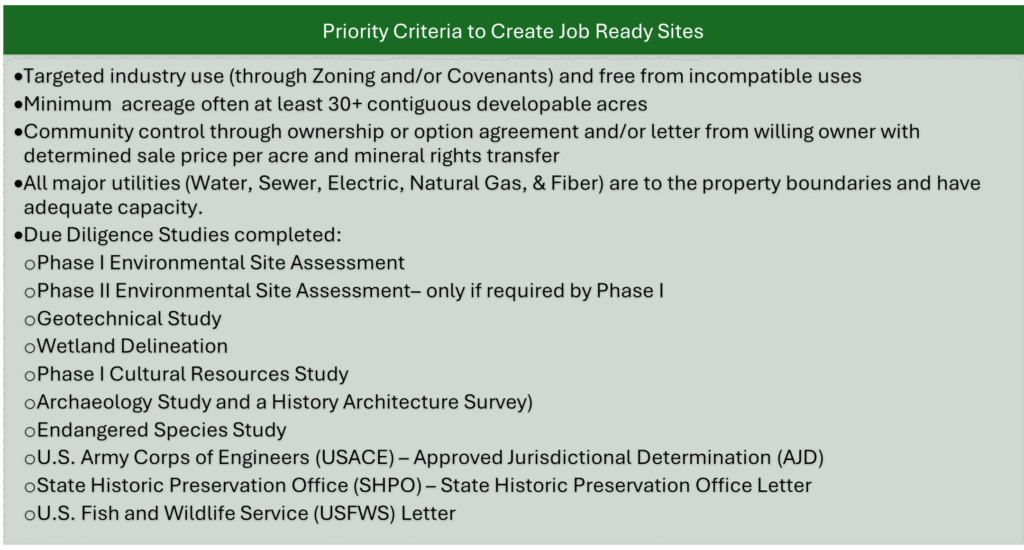
When is a site job ready? Sites ready for construction are job ready when they have defined contiguous acreage under control by a party ready to sell or develop for a competitive price with an industry focus, zoning, infrastructure, and utility service tied to its highest and best use and due diligence reports that clarify there are no impediments at the site. Hundreds of criteria can be required before a site is job ready for construction, but the list below provides a basic framework for when a site is job ready.
An industry cluster, workforce development, and real estate market analysis determine what industry is most likely to be attracted to a site, and this analysis will define the size, location, zoning, infrastructure, utilities, and other requirements of the site. Industry clusters are regional concentrations of related industries. A location quotient is an indicator of the economic concentration of a certain industry in a state, region, county, or city compared to a base economy, such as a state or nation that measures industry clusters in a region. A location quotient greater than 1 indicates the concentration of that industry in the area. As the table below illustrates, the Midwest states all have a higher-than-average number of manufacturing production jobs with Indiana leading the list of having a higher concentration of manufacturing jobs in the United States.
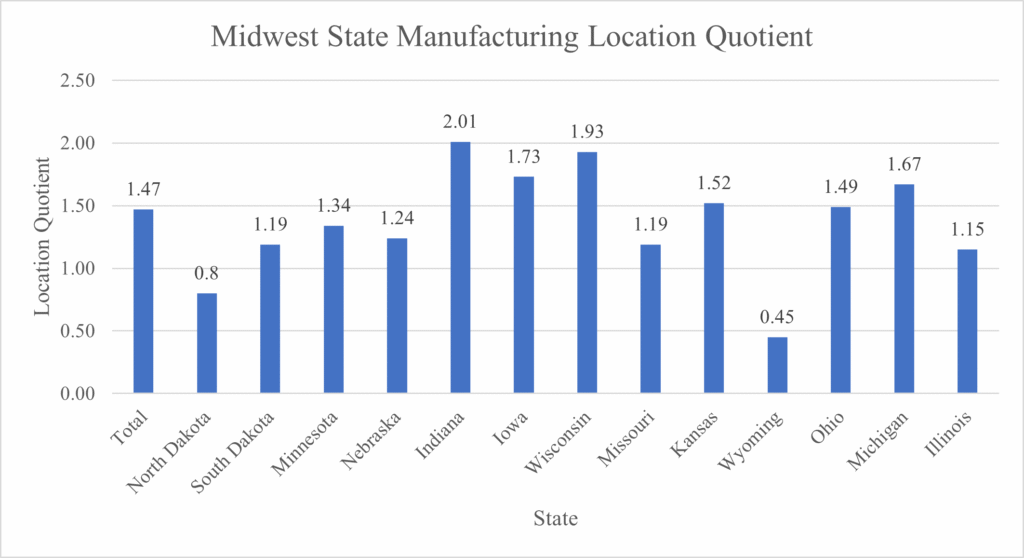
Source: U.S. Bureau of Labor Statistics
Site development planning must focus on the availability of a skilled workforce ready to work in the industry targeted for job retention and creation. A site needs to have its workforce pool defined through a review of the total working population of the workforce circle, a review of worker commuting patterns, regional population growth patterns, a comparison of younger or new workers entering the workforce compared to older workers preparing to retire. Finally, wage rate comparisons need to be determined to define states and regions which offer a competitive advantage to companies.
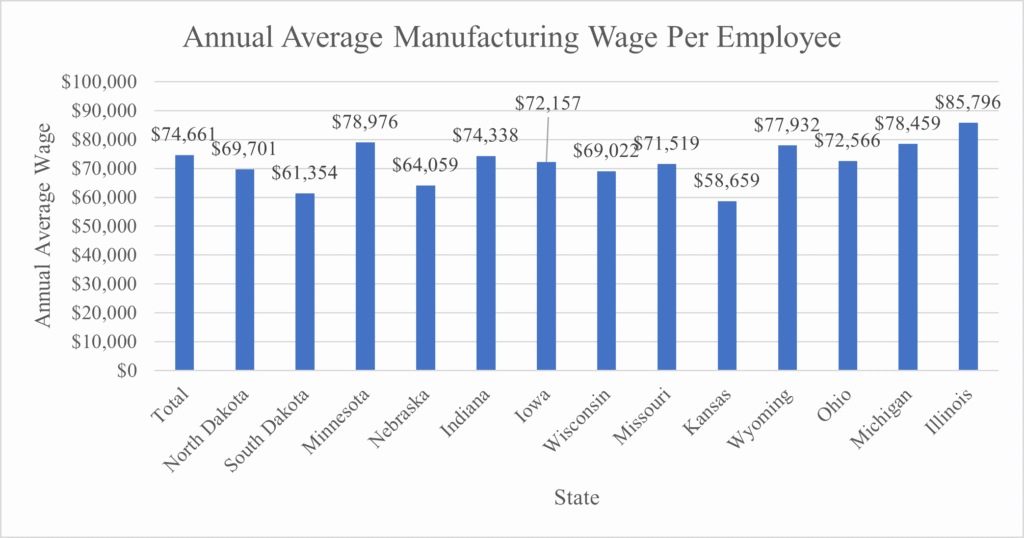
Source: U.S. Bureau of Labor Statistics
Site development’s highest and best use strategies need to not only examine the industry cluster and workforce capabilities of potential sites but also review the cost of purchasing or leasing in a region to determine the economic viability of that site. Sites need to be reviewed for potential uses through a benchmark comparison to see if there is a real estate demand for the potential use by measuring vacancy, rent and absorption rates of comparable sites in the region and how this will impact the real estate costs of potential sites. This real estate review should define the competitive landscape by reviewing the sizes of industrial or other relevant buildings, size of industrial parks or other relevant sites, location of the industrial park or building or other relevant sites, and key real estate metrics including vacancy rates, absorption, and planned construction.
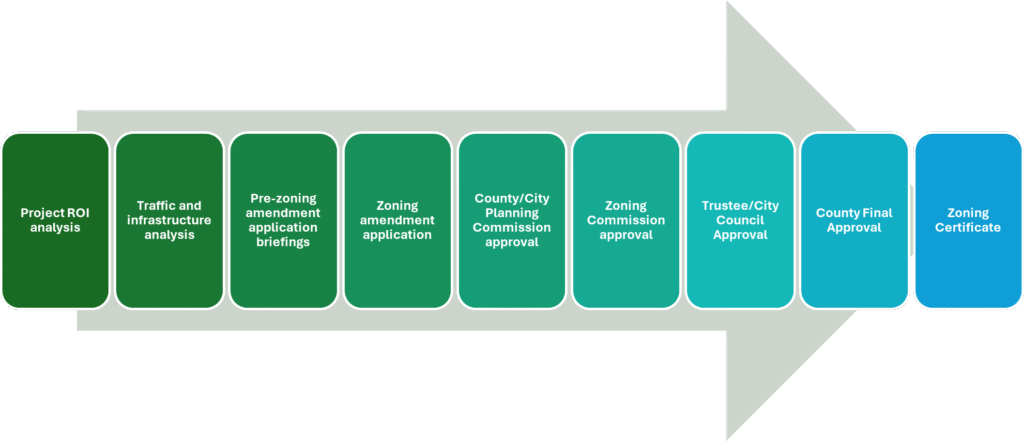
If a site passes the tests for industry cluster, workforce and real estates, site control through an option to purchase for a community or developer willing to sell or lease the land at a defined and competitive rate is the next step and most of these sites will be for the minimum acreage often at least 30+ contiguous and developable land without incompatible uses on and surrounding the site. Gaining access to utilities (water, sewer, electric, natural gas, and fiber) at the property boundaries needs to be negotiated. Defining the infrastructure needs of the site and the surrounding area is critical from a transportation standpoint as this impacts the zoning process, and marketability of the site. Due diligence studies need to be completed that address environmental, geotechnical, wetland, cultural resource, archaeological, endangered species, U.S. Army Corps of Engineers, historic preservation and fish and wildlife. Zoning approval needs to be gained for the site to be developed and marketed to end users.
Economic development incentives are the final step in making a site job ready. Most states provide economic development incentives tied to site development and infrastructure funding. As the chart below illustrates, the Midwest states provide substantial economic development incentives to prepare sites for development and water and wastewater programs.