

No one generation is like the next. Baby-boomers grew up with aspirations of owning a home in the suburbs as soon as their kids arrived. Their children, Millennials, often had no interest in that single family house on an acre lot. Instead, the younger generation was focused on walkable neighborhoods good for the environment and connected to where they could live, work and replay—thus the mixed-use development was reborn and spread like wildfire.
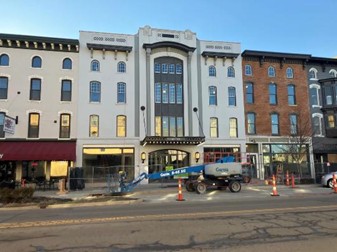
A mixed-use development involves more than one use or purpose within a shared building or development area, can be a combination of housing, office, retail, medical, recreational, commercial or industrial components or a single building occupied by a retail shop on the ground floor with an upstairs apartment or even an urban village with multiple buildings containing separate but compatible uses. Mixed-use developments have several attractive attributes including: highly efficient use of space, connecting businesses to where workers live, builds walkable communities attractive to a new generation of workers, fosters social interaction through well designed common public spaces, and contributes to environmental sustainability.
Many cite Downtown Chicago’s Water Tower development with its massive retail mall, office and retail project on Michigan Avenue as one of the first major mixed-use developments. However, mixed-use developments have traveled a long way from Michigan Avenue but often require a Public-Private Partnership (PPP) to happen. The Montrose Group was proud to work with Newark Development Partners to build such a PPP that led to the redevelopment of the Newark Arcade. Newark, Ohio is a legacy city within Central Ohio working to redevelop its Downtown and is home to the Newark Arcade, an underutilized historic structure waiting to be the focal point in Downtown Newark. Newark Development Partners, an economic development corporation, with the support of the Montrose Group, developed a successful capital stack to transform the Newark Arcade through $8,550,000 in private financing, $9,000,000 in donations and public support, the use of $2,900,000 in federal historic tax credits, $1,000,000 in state historic tax credit, $1,500,000 from Ohio’s Transformational Mixed-Use Development Program. The result is the rebirth of the Newark Arcade that includes 3,320 Sq. ft. of retail, 2,491 Sq. ft. of restaurants, 24,189 Sq. ft. of office and 18 loft style apartments. The Newark Arcade is now a magnet for younger workers in the heart of a small community.
Contact Dave Robinson of the Montrose Group at drobinson@montrosegroupllc.com if you need help with a mixed-use development or other economic development or policy matter.