

Corporate site selection has become an elimination process. Consultants screen out communities in the first 72 hours over a missing utility study, an unresolved wetland, or a seller who will not sign an option. An industrial site development plan exists to make sure your community survives that first cut. In fact, it is the single highest-leverage document an economic development organization can produce. Megaprojects do not go to communities that promise readiness. They go to communities that have already documented it.
What the Industrial Site Development Plan Researches
Every plan starts with a research phase that defines who a community and site is:
- Site control and title — ownership, heirs, liens, mineral rights, and whether an option or purchase agreement can be executed
- Utilities — electric capacity and substation distance, gas line pressure and diameter, water and wastewater capacity, redundant fiber
- Environmental and geotechnical — Phase I/II assessments, wetlands and stream delineation, floodplain, endangered species, soil bearing capacity
- Transportation — interchange distance, road weight limits and turning radii, rail service, air and inland port access
- Regulatory — zoning, deed restrictions, permitting timelines, and the historic review that quietly kills schedules
- Labor and market — commuting-zone labor draw, wage benchmarks, competing employers, and housing and childcare capacity
Who Belongs in the Listening Sessions
After the data dive, the plan requires listening to key stakeholders. These include local economic development leaders, landowners and their counsel, the county commissioners, township trustees, and municipal councils that control zoning and annexation, port authorities, land banks, and county engineers, every utility provider, school districts and auditors on valuation, workforce leaders, realtors, brokers, industrial developers, and adjacent property owners.
Action Plan Steps for Industrial Site Plans
Action steps span real estate, industry targeting, site development, infrastructure financing, and incentives:
- Secure options or purchase agreements across the full assemblage.
- Complete due diligence and pursue state site certification.
- Pre-zone the site or adopt a planned industrial district.
- Commission a utility extension study with cost allocation and a financing mechanism.
- Build a phased infrastructure budget tied to specific funding programs.
- Prepare a marketing package with GIS mapping and a documented permitting timeline.
- Adopt a workforce and housing readiness strategy alongside the site plan.
Case Study: North Ridgeville, Ohio
The Montrose Group’s site development plan for North Ridgeville, Ohio shows how industrial plans support job creation and capital investment. North Ridgeville, in Lorain County, bought a 46-acre farm parcel and rezoned it to I-2 Light Industrial in 2024. Then it commissioned a site development plan. The study documented a 12- to 16-inch water line on State Route 83, a Norfolk Southern mainline with a confirmed spur option, gas service on Avon Belden Road, an airport 8.55 miles away, and a 45-minute labor draw of 980,000 employed residents.
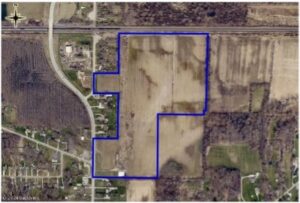 The recommendations were practical: partner with an industrial developer on 50,000- to 100,000-square-foot speculative buildings, layer JobsOhio and public infrastructure finance, tie abatement to guaranteed payroll, and market to advanced, automotive, and food manufacturing with Team NEO and JobsOhio. Not a mega site — a repeatable one.
Patient site work is not a cost center. It is the deal.
The Montrose Group has completed over sixty economic development plans for public and private sector clients. Contact Dave Robinson at drobinson@montrosegroupllc.com if you need assistance with any economic development plan.