

A data center community benefit agreement is fast becoming a make-or-break tool for local leaders. The United States now has more than 3,000 operating data centers, with another 1,500-plus in development. The boom is also relocating. Most existing facilities sit in metro areas, but two-thirds of planned projects are headed for rural communities, and 39 percent are landing in counties that have never hosted one.
A concentrated, fast-moving boom
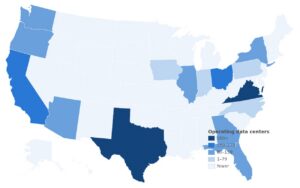
The growth is real but lopsided. Virginia leads with 398 operating facilities, followed by Texas with 296. California, Ohio, New York, and Illinois come next. Georgia, Pennsylvania, and Indiana have some of the fastest-growing pipelines, with planned counts that rival or exceed what exists today.
Data centers also cluster. Nine in ten sit within five miles of another, so a single anchor often signals a wave.
The energy demand behind the headlines
What makes data centers different from a typical employer is load. A single large facility can draw 100 to 1,000 megawatts. That is the power of a mid-sized to large city.
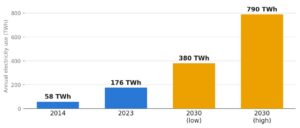
The national picture is climbing just as fast. Data centers consumed about 176 TWh in 2023, or 4.4 percent of U.S. electricity. By 2030, that figure is projected to reach 380 to 790 TWh — between 9 and 17 percent of the grid, more than double today’s share.
In hotspots the strain is acute. In Virginia, data centers could consume 41 to 59 percent of state electricity by 2030. Layered onto an already-stressed grid, that demand drives the central community fear: that a data center’s arrival will raise everyone’s electric bill.
What a data center community benefit agreement is
A community benefit agreement (CBA) is a negotiated, often legally binding contract between a developer and a host community. It spells out what the project will deliver, and what it will pay for, in exchange for local approval. For data centers, the most important clauses now concern electricity: who funds the new generation and grid upgrades, and how residents are shielded from rate increases.
Structuring a CBA so rates don’t rise
The core principle is simple: data centers should pay their own way. Effective agreements pair tools that regulators and developers are converging on nationally.
A separate large-load rate class
This keeps the facility’s costs off household bills. Pennsylvania’s PPL settlement created exactly this — the state’s first deal to shield average ratepayers from data center costs, with protection against stranded costs if a project is abandoned.
Cost-responsibility clauses
These require the developer to fund all transmission and distribution upgrades it triggers, following Arizona’s HB 2738 model.
Minimum-take commitments
Also called “take-or-pay” terms, these protect the community from stranded infrastructure if load doesn’t materialize.
On-site or dedicated generation
Under the March 2026 federal Ratepayer Protection Pledge, seven hyperscalers agreed to build, bring, or buy new generation rather than draw from existing supply. PPL’s Homer City redevelopment pairs data centers with on-site natural gas generation. Amazon’s Indiana project, where the company covers all build-out costs, is projected to save local households roughly $1 billion over 15 years.
A well-structured data center community benefit agreement makes the grid question negotiable. Approached well, a data center can fund new supply that strengthens the system for everyone — turning a feared cost driver into shared infrastructure.
The Montrose Group is actively representing communities, developers, and data centers in negotiating CBAs and protecting access to affordable electricity. For help with data center projects, contact Matt McCollister.