

 The Ohio Life Sciences Association, in partnership with the Montrose Group, LLC, developed the Ohio Life Sciences Industry Guide to provide local communities and economic developers with the tools and recognition needed to attract high-paying jobs and life-saving innovations to Ohio.
The Ohio Life Sciences Industry Guide serves as a first-of-its-kind resource for Ohio’s local government and economic development leaders. The guide outlines the key components that make communities attractive to life sciences companies, including zoning considerations, workforce development strategies, infrastructure needs, and access to innovation hubs.
The Ohio Life Sciences Industry Guide defines life sciences companies within these six core subsectors: Agricultural Biotechnology, Medical & Testing Laboratories, Medical Devices & Equipment, Medical Product Distribution, Pharmaceuticals & Therapeutics, and Research & Development. As of 2023, Ohio’s life sciences industry consists of approximately 63,765 jobs that span across 4,860 business establishments.
The existence of a life science ecosystem is also a critical component to retaining and attracting life science companies. Educational institutions, health care systems, research and development centers, venture capital and life science company startup initiatives, insurance companies, manufacturing and “white collar” service providers all engaged for the life sciences industry play a big part in supporting company growth in this industry sector.
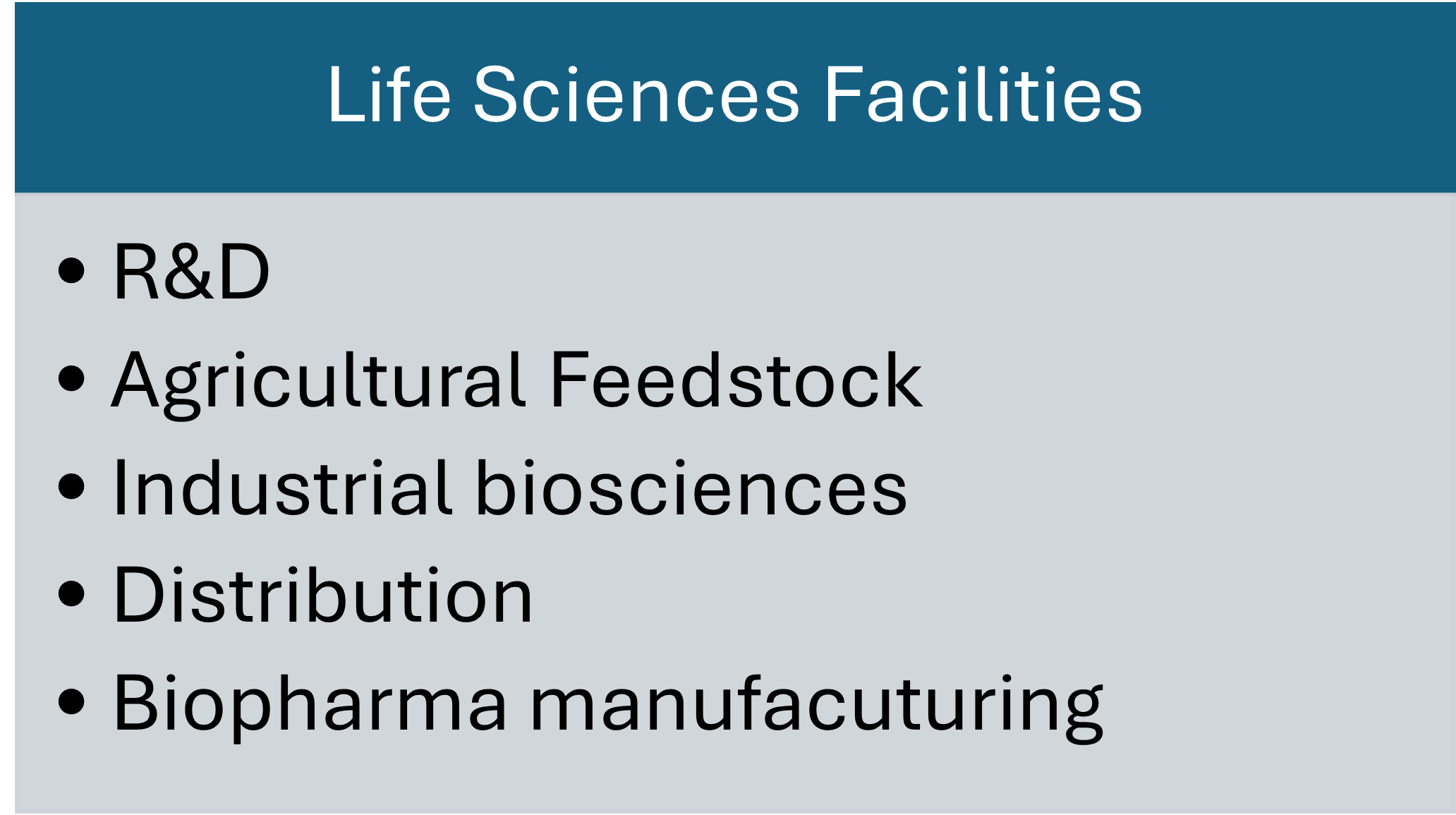
Life Science facilities can vary in shape and size. Research, testing, and medical laboratories typically require smaller floor plans, typically ranging from 10,000 to 60,000 square feet. Meanwhile, Agricultural feedstock, industrial biosciences, life science-related distribution and biopharma manufacturing facilities can range from 50,000 to 1,000,0000 SF as they require significant space for materials and transportation infrastructure. Life science facilities often require precise control of environmental conditions to operate effectively.
From a land use perspective, special zoning is often required. Many zoning codes, especially in Ohio, where life science industries are not yet emerging, lack specific text or codes that allow the uses required by life sciences. Wet lab space is more complicated to develop compared to standard commercial office space. Wet lab space construction costs can be 3-5 times higher than those for office development and take about twice the amount of time to complete.
The life sciences industry is also attracted to the local and state economic development incentives that can range from property tax abatements that drive expensive new capital investment, to tax credits tied to job creation to workforce development programs that supply workers. Attracting the life sciences industry is critical to the long term economic success of regions across the United States and understanding what this industry needs to succeed in a region and site is a critical first step towards attracting these companies.
Please contact Wade Williams at wwilliams@montrosegroupllc.com at the Montrose Group if you need assistance with a life sciences corporate site location project or to get your community prepared for a life sciences project.